Smolsies 2 - Cute Pet Stories
- 3.9
- Rating
- 10.00M
- Installs
- Free
- Price

 Analysis by App-foxy
Smolsies 2 is the kind of educational game I would suggest to a child who enjoys caring for virtual pets more than competing for a high score. I spent time with it as a gentle, story-led experience from TutoTOONS, and its main appeal is easy to understand: you hatch fluffy animals, look after them, explore their stories, and gradually open up surprises. It feels designed for short, relaxed visits rather than demanding sessions.
The game is free to start and carries an Everyone age rating, which makes it approachable for families looking for something softer than an action game. It is available for devices running Android 6.0 or later, and the current version is 2.2.161. I would still treat the age label as a starting point rather than a complete recommendation, because the way a child handles optional purchases and repeated play matters just as much as the content itself.
Its audience is already quite broad. The game has passed 10 million installs and holds an average rating of 3.8 from around 33 thousand ratings. Those figures suggest a well-known children’s title with a mixed but generally workable reception. My own view is that its strongest quality is not depth; it is the welcoming rhythm of checking in, caring for cute creatures, and discovering what happens next.
You May Also Like

 Blood Strike: 2.5 Anniversary
Blood Strike’s Loadouts Turn Every Drop Into a Tactical Gamble
A close look at Blood Strike’s custom loadouts: how fast access to signature weapons reshapes its battle royale rhythm, rewards preparation, and narrows the gap between fights.

 Pandora - Music & Podcasts
Pandora’s Music Is Easy to Start, but Harder to Recover
Pandora’s strength is its low-effort path from a seed to a station. Its weak spot is how much confidence it asks you to place in connection, setup, and quiet recovery.

 8 Ball Pool
 Is Built on Rivalries, Rematches, and Routine
A close look at the rivalries, rematches, shared routines, and unanswered safety questions that turn a quick pool match into a persistent mobile community.

 Samsung Music
’s Quiet Strength Is Playing What You Already Own
Its reach comes less from spectacle than from dependable access to a personal library. That simplicity is both the app’s strongest retention engine and its ceiling.

 AccuWeather: Weather Radar
AccuWeather Review: A Quick, Clear Forecast for Everyday Decisions
For everyday plans, the best forecast is the one you can understand quickly. AccuWeather makes rain timing, radar, and local conditions easy to act on, with a few trade-offs.

 Hill Climb Racing
Why Hill Climb Racing Still Turns Crashes Into One More Run
A tiny car, a bumpy hill and one more upgrade: Hill Climb Racing keeps resurfacing because its simple chaos makes every near-miss feel personal.
More From Our News Desk



How the game reads and guides young players
I find that the game’s visual guidance is most useful when a child can recognize familiar actions but is still learning to follow written instructions. In this section, I would look at how pictures and simple goals support independent play, and where a caregiver’s brief explanation can make a story easier to follow. That leads naturally to the separate question of whether the touch and sensory demands suit a particular player.
Simple visual goals make the first minutes approachable
The interface is built around recognizable actions rather than complicated instructions. A child can understand the basic idea of finding an animal, caring for it, and seeing a story or surprise unfold without needing to learn a large set of rules first. That matters for younger players, especially those who become frustrated when a game begins with long explanations or several menus.
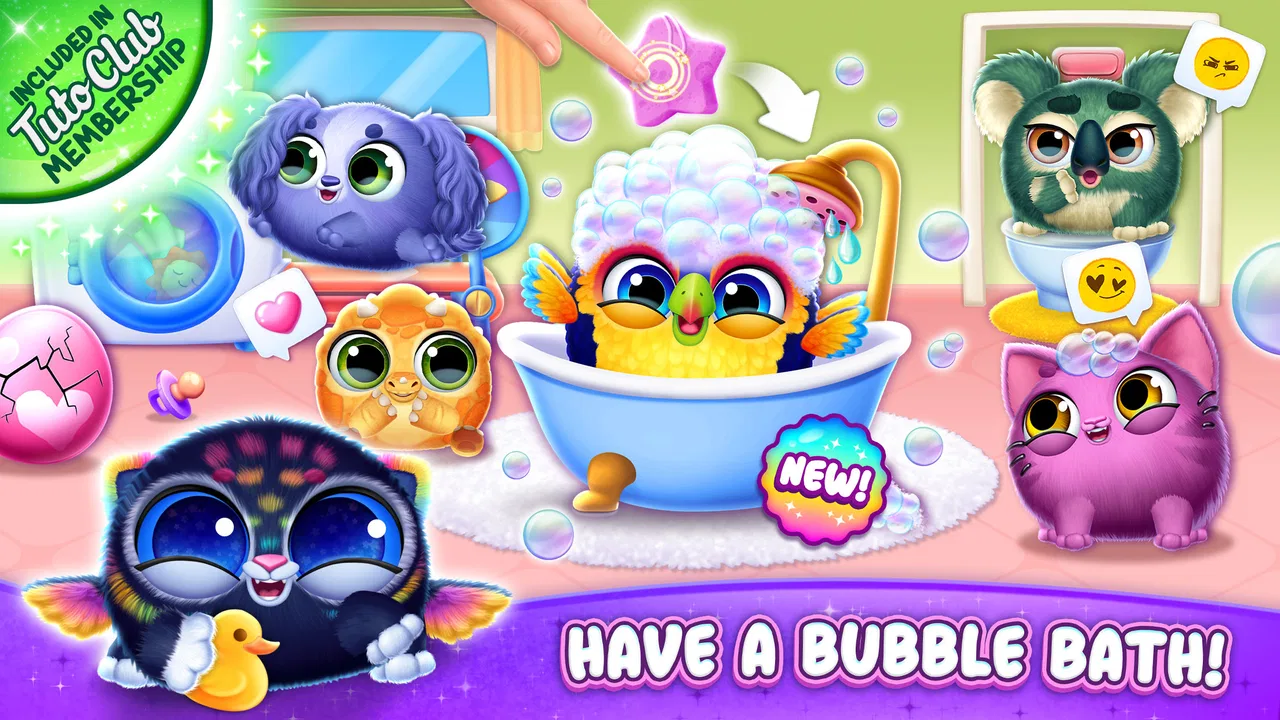
I found the visual presentation more important than the written guidance. The pets, rooms, and objects are presented in a bright, rounded style, so the game communicates through pictures and reactions as much as through text. For a child who is still developing reading confidence, that can make the experience feel less like a lesson and more like play.
There is a useful difference between a game that merely looks cute and one that gives a child a clear reason to continue. Here, the promise of another animal, story moment, or surprise gives each small interaction a purpose. I would not describe the navigation as deep, but that is partly the point: a child can return after a break and usually understand what to do without rebuilding a complicated mental map.
Reading support has practical limits
The visual cues help, but they do not remove every reading demand. Children who cannot yet read independently may still need an adult nearby when a story introduces new information or when an instruction is less obvious from the artwork. I would therefore place the game in the “play together or check occasionally” category for early readers, rather than assuming it is fully self-explanatory.
One practical approach is to let the child handle the pet-care actions while an adult reads story text aloud. That turns the game into a shared activity without taking control away from the child. It also gives the adult a chance to notice whether the child understands the goal or is simply tapping whichever object looks most colorful.
For older children who want puzzles, explicit learning exercises, or measurable academic progress, the educational label may set expectations too high. The learning here is informal: following a sequence, noticing cause and effect, remembering routines, and engaging with simple stories. I would choose a dedicated literacy or mathematics app instead if a specific school skill is the priority.
A gentle routine works better than a long play session
The clearest workflow is to use the game in small visits. A child can open it, check on the animals, complete a few available interactions, and stop before the experience becomes repetitive. This is one of the more useful ways to use it in everyday life: a calm activity after school, during a quiet indoor break, or while waiting somewhere that allows a device.
I would avoid presenting it as a task that must be completed. The game is more comfortable when the child feels invited to explore rather than pressured to maintain a perfect routine. That distinction is especially helpful for children who react badly to timers, missed goals, or the feeling that a virtual pet is demanding constant attention.
Motor, sensory, and situational access
I’d assess access on the device the child will actually use: a stable surface, comfortable screen brightness, and low initial volume can make a first try easier to judge. A short session also helps reveal whether tapping feels comfortable and the colorful presentation stays pleasant rather than tiring. Those practical observations matter more than assuming that a gentle pet game works equally well for every child.
Touch interaction is approachable, but not effortless for everyone
The game’s pet-care format is naturally suited to touchscreens. Tapping and exploring are easier to understand than a controller layout, and the child can focus on the creature rather than remembering button combinations. For many players with limited gaming experience, that lowers the entry barrier.
At the same time, touchscreen play is not automatically accessible. A child with reduced fine-motor control may find small targets, quick selections, or repeated tapping tiring. I would test the game on the child’s actual device rather than relying only on the attractive presentation. Screen size, touch sensitivity, and the way the child holds the phone can change the experience considerably.
A useful family workaround is to place the device on a stable surface instead of asking the child to hold it throughout the session. That can make two-handed interaction easier and reduce accidental movement. It also lets an adult help with a difficult tap while the child continues choosing which pet or story to explore.
Colorful presentation can be engaging and tiring
The bright art style is one of the game’s main strengths for children who respond to expressive characters and visual rewards. The animals are easy to distinguish by appearance, and the world feels friendly rather than threatening. I can see this working particularly well for a child who needs a low-pressure activity that still offers a sense of discovery.
However, the same visual energy may not suit every player. Children who are sensitive to busy screens, strong color contrast, or frequent movement may prefer shorter sessions with the device brightness adjusted to a comfortable level. I would also avoid assuming that a child who enjoys the animals will enjoy unlimited exposure to the presentation; interest and sensory comfort are separate things.
Sound is another part of the experience that families should judge in context. In a quiet room, audio can make the pets feel more responsive, while in a car, waiting room, or shared household space it may be distracting. I would begin with the volume low and observe whether the child follows the visual information comfortably without needing constant sound.
Stories add emotional appeal without requiring competition
Some children are excluded from game recommendations because so many titles depend on speed, precision, or winning. This one offers a different route into play. The animals and their stories create motivation without making competition the center of the experience, which can be a better fit for children who become anxious when they lose or who prefer imaginative activities.
That does not mean every child will find the pace satisfying. A player who wants immediate challenges, complex strategy, or a clear finish line may see the same gentle design as slow. I would choose it for nurturing play and light exploration, not for developing fast reactions or advanced problem-solving habits.
Using it in real family situations
Imagine a child waiting for an appointment with a parent. A short visit to the game can provide a familiar activity: the child checks the virtual animals, explores a story, and then hands the device back without needing a competitive match to finish. That makes it more flexible than many multiplayer games, which can be difficult to pause politely.
It can also work as a shared wind-down activity. An adult might ask the child to explain what happened in a story or why a particular animal needs attention. Those questions add language practice and turn passive tapping into conversation. I would keep this informal, though; too many questions can make a relaxing game feel like homework.
For travel, the important practical step is to open and test the game before relying on it as a distraction. A child may expect every feature to behave the same way in a different setting, and frustration is more likely when a parent is already busy. I would prepare the device, set a comfortable volume, and agree on a short play period in advance.
Where the inclusive design still falls short
The most obvious barrier is the presence of in-app purchases. Individual items range from $2.49 to $159.99, so the free starting point does not mean every optional part of the experience is cost-free. This is especially important with children, who may not understand that a tap can lead to a real charge. I would review purchase controls on the device and make the payment arrangement clear before handing it over.
This pricing structure can also affect the emotional experience. If a child sees an appealing animal or surprise connected to a purchase, the game may become less relaxing for families who are trying to avoid spending. I would explain that some choices are optional and that not every visible item needs to be unlocked. That conversation is more useful than simply saying “do not buy anything,” because it teaches the child how digital purchases work.
Another limitation is that the game’s accessibility is mostly practical rather than customized. A child may benefit from visual storytelling and simple touch interaction, but families should not expect a full set of specialized controls or individualized reading support. If a player needs adjustable interaction methods, highly structured learning content, or carefully controlled sensory presentation, a purpose-built alternative may be a better choice.
The educational value also has a boundary. Caring for virtual animals can encourage sequencing, attention, and storytelling, but it is not a replacement for direct teaching or a structured developmental program. I would use it as one activity among others, particularly alongside real-world pretend play, books, drawing, and conversation.
How it compares with familiar alternatives
Compared with a conventional pet simulator, this game puts more emphasis on stories and discoveries, so it may feel more meaningful to a child who wants a reason behind each interaction. Compared with a competitive children’s game, it is calmer and less dependent on winning. Compared with a dedicated educational app, though, it offers less obvious progress toward a specific academic target.
That trade-off makes the choice fairly clear. Pick this one when emotional engagement, cute animals, and low-pressure exploration are more important than lessons with a defined curriculum. Choose a literacy, numeracy, or accessibility-focused app when the family’s main goal is measurable practice or more control over how the child interacts with the screen.
The developer, TutoTOONS, has positioned the game for a broad family audience, and the Everyone rating supports that general direction. Still, a broad rating cannot decide whether the pacing, purchase model, visual style, or touch demands suit one particular child. The best recommendation depends on the player’s reading ability, sensory preferences, motor comfort, and tolerance for optional content.
My final recommendation for families
I think Smolsies 2 is a pleasant choice for children who enjoy virtual animals and storybook-style discovery. Its strongest feature is the way it creates a friendly reason to return without turning every visit into a contest. The simple visual language, expressive pets, and flexible session length make it easy to share with a parent, sibling, or caregiver.
I would recommend starting with a supervised session, not because the game is difficult, but because that first visit answers the questions that matter most: Can the child read or understand the guidance? Are the touch targets comfortable? Is the screen too busy? Does the child accept the optional purchase boundaries? Those observations are more valuable than the age label alone.
There are real reasons to skip it. Children seeking challenging gameplay may become bored, families wanting a fully structured educational tool may find the learning too indirect, and players with particular motor or sensory needs may require more customization than the game provides. The purchase range is also a serious consideration for any shared family device.
For the right child, however, the free entry point offers an easy way to try a gentle pet-care world before deciding whether it deserves regular play. My inclusive verdict is positive but measured: this is best as a calm, shared, short-session game whose accessibility comes from simplicity, not from extensive personalization. If that matches your child’s needs, the cuddly animals and small stories can make screen time feel warm, manageable, and genuinely engaging.
FAQs for Smolsies 2 - Cute Pet Stories
01What is Smolsies 2 - Cute Pet Stories about?
Smolsies 2 - Cute Pet Stories is a delightful virtual pet game where players can hatch, raise, and take care of adorable creatures called Smolsies. The game features various activities such as feeding, playing, and exploring the vibrant, colorful world. Players can engage with multiple mini-games and storylines, making it an engaging experience for all ages.
02Is Smolsies 2 suitable for young children?
Yes, Smolsies 2 is designed to be kid-friendly and is suitable for young children. The game features cute graphics, simple controls, and educational elements that promote creativity and responsibility. Parents can feel confident that the content is appropriate and engaging for children, providing a safe and entertaining digital environment.
03What platforms is Smolsies 2 available on?
Smolsies 2 - Cute Pet Stories is available on both Android and iOS platforms. This ensures that whether you have a smartphone or tablet, you can enjoy caring for and playing with your Smolsies on the go. Simply visit the Google Play Store or the Apple App Store to download and install the game on your device.
04Are there in-app purchases in Smolsies 2?
Yes, Smolsies 2 includes optional in-app purchases. While the game is free to download and play, players have the opportunity to buy additional items, characters, or features. These purchases can enhance the gameplay experience but are not necessary to enjoy the core elements of the game. Parents may want to manage in-app purchases through device settings.
05How does the game encourage creativity and learning?
Smolsies 2 encourages creativity and learning through its interactive gameplay and storytelling elements. Players engage in nurturing tasks, problem-solving activities, and creative customization of their Smolsies and surroundings. The game fosters imagination and responsibility while introducing basic educational concepts in a fun and engaging way, suitable for young players.
Pros
- Adorable graphics appeal to all ages.
- Simple gameplay suitable for kids.
- Frequent updates with new content.
- Encourages creativity and imagination.
- No in-app ads interrupting gameplay.
Cons
- Limited challenges for older players.
- In-app purchases can be costly.
- Requires internet for some features.
- Repetitive tasks may bore quickly.
- Limited educational value.

Smolsies 2 - Cute Pet Stories
Gallery